Choosing the right publishing method is one of the biggest decisions an author will make. The path you choose affects your creative control, timeline, budget, royalties, distribution, marketing responsibilities, and long-term publishing goals.
Both self-publishing and traditional publishing have unique advantages and challenges. One gives authors more control and speed, while the other offers industry support and wider traditional distribution. This guide compares both options so you can choose the publishing path that aligns with your goals, experience, budget, and vision for your book.
Two Publishing Models
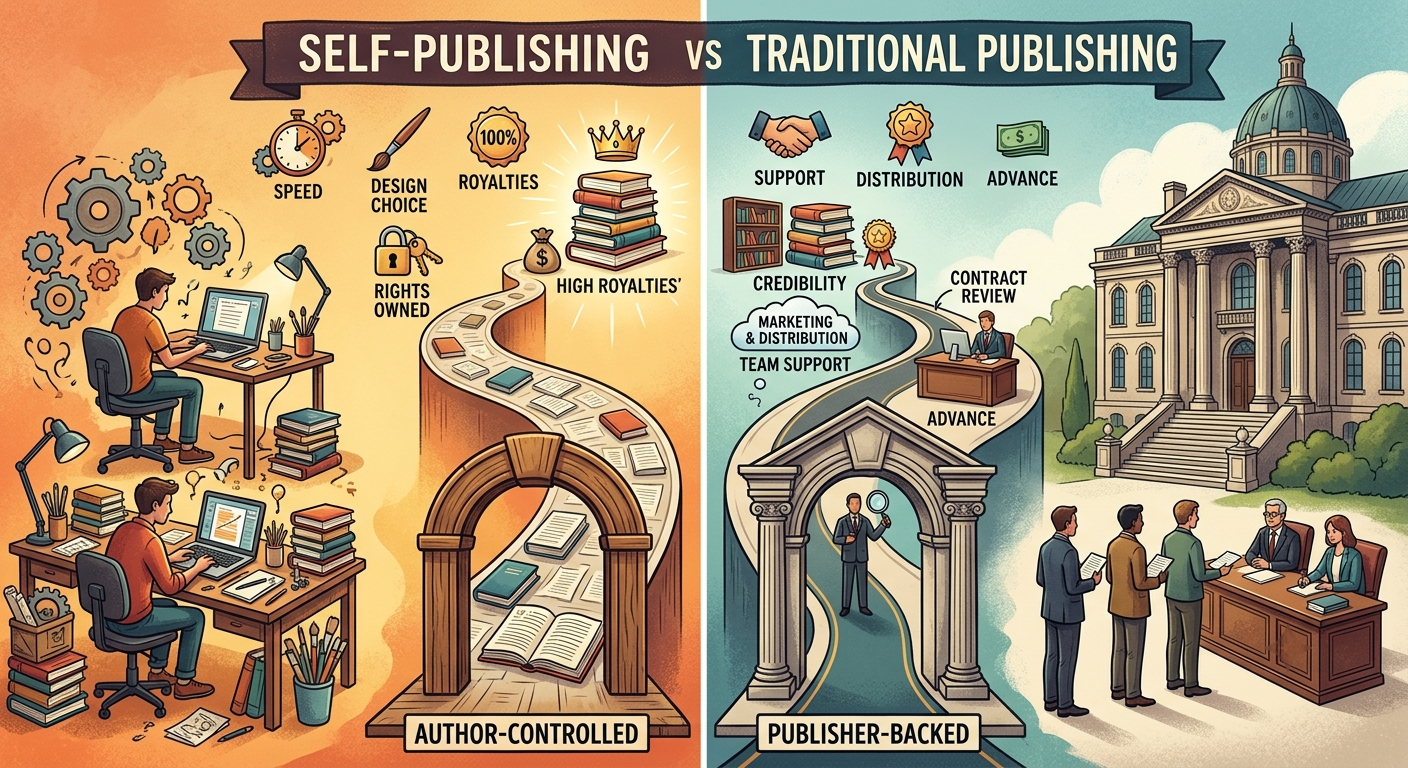
Self-publishing is a publishing model where the author manages the process independently. The author usually hires editors, cover designers, formatters, and marketing professionals, then publishes through online platforms or distributors.
Traditional publishing is a model where a publishing house accepts the manuscript and manages most of the production process. This usually includes editing, cover design, formatting, printing, distribution, and some marketing support.
Each model works differently, and there is no one-size-fits-all solution. The best choice depends on what the author wants most: control, speed, professional backing, bookstore reach, higher royalties, or industry recognition.
How Self-Publishing Works
In self-publishing, the author is responsible for managing the entire publishing process. This includes preparing the manuscript, hiring professionals, approving the cover, formatting the book, choosing platforms, setting pricing, and planning promotion.
Most self-published authors work with freelance editors, designers, and formatters to make the book look professional. Some also use a book publishing service to help with editing, formatting, cover design, ISBN setup, distribution, or launch support.
Authors can publish through online platforms that make the book available as an eBook, paperback, hardcover, or audiobook. They also control pricing and usually earn higher royalties than they would through traditional publishing. However, they are also responsible for marketing, sales strategy, reader reviews, and long-term visibility.
How Traditional Publishing Works
Traditional publishing usually begins with finding a literary agent. Many major publishers do not accept direct submissions, so agents help authors submit manuscripts, negotiate contracts, and manage communication with publishers.
Once a publisher accepts a manuscript, the author signs a publishing contract. The publisher then manages editing, cover design, formatting, printing, distribution, and release planning. The author may receive an advance and then earn royalties after enough copies are sold.
Marketing is often shared. Publishers may help with publicity, distribution, and trade visibility, but authors are still expected to promote their books, build an audience, attend interviews, and support the launch.
Self-Publishing: Pros and Cons
Self-publishing gives authors full creative control. They can choose the title, cover, interior design, release date, pricing, book description, and marketing strategy. This is helpful for authors who want ownership over every decision.
Another advantage is speed. A self-published book can often be released much faster than a traditionally published book. Authors also keep ownership of their publishing rights and can update the book at any time if they want to fix errors, change pricing, refresh the cover, or add new content.
Self-publishing also offers higher royalty rates, but it comes with challenges. Authors usually face higher upfront costs because they must pay for editing, design, formatting, and marketing themselves. The book publishing cost can vary widely depending on the quality of services used.
Self-published authors must also handle promotion. They may have limited access to physical bookstores and libraries unless they build a strong distribution and marketing plan. This path requires time, planning, and business skills.
Traditional Publishing: Pros and Cons
Traditional publishing offers professional editing, design, production, and distribution support. Authors work with experienced publishing teams who understand the market, book positioning, retail standards, and production quality.
This route can also provide better access to bookstores, libraries, reviewers, media outlets, and industry networks. Many readers, literary organizations, and booksellers still view traditional publishing as a sign of credibility.
Another advantage is that authors usually do not pay upfront publishing costs. The publisher invests in the book and earns money through sales. However, this does not mean the process is easy.
Traditional publishing is highly competitive. Authors may face many rejections before receiving interest. The timeline is also longer and can take months or years. Royalty rates are usually lower, and authors may have less creative control over the title, cover, release schedule, and marketing decisions.
Which Publishing Option Is Best for You?
First-time authors may prefer self-publishing if they want control and faster results. Others may choose traditional publishing if they want industry validation and access to established distribution.
Fiction writers often choose based on genre, audience, and career goals. Nonfiction authors may consider which path best supports their authority, speaking opportunities, and professional brand.
Business professionals and entrepreneurs may prefer self-publishing because it lets them release a book quickly and use it as a credibility tool. Children’s book authors may need to compare both options carefully because illustration, formatting, and print quality can affect the final product.
Authors seeking creative freedom may enjoy self-publishing. Authors seeking industry recognition may prefer traditional publishing. The right choice depends on what success means to you.
Factors to Consider Before Choosing
Budget is one of the first factors to consider. Self-publishing usually requires upfront investment, while traditional publishing usually does not. However, authors should still understand the possible book publishing cost of editing, marketing, platform building, and promotion.
Timeline also matters. Self-publishing is faster, while traditional publishing takes longer. Creative control is another major factor because self-publishing gives authors more authority over decisions.
Authors should also consider royalty expectations, marketing skills, target audience, distribution needs, and long-term career goals. If you want to get your book published quickly and control the process, self-publishing may be a better fit. If you want a publisher’s support and are willing to wait, traditional publishing may be stronger.
Common Myths About Self-Publishing and Traditional Publishing
One common myth is that self-published books are not professional. In reality, self-published books can be high quality when authors invest in editing, design, formatting, and marketing.
Another myth is that traditional publishers do all the marketing. Publishers may help, but authors still need to build visibility and connect with readers.
Some people believe self-publishing is easier. It is faster, but it requires planning, money, and business effort. Others believe traditional publishing guarantees success, but even traditionally published books need strong positioning and promotion.
It is also not true that only famous authors get publishing deals. New authors can succeed if they have strong manuscripts, clear audiences, and professional submission materials.
Common Mistakes Authors Make
Many authors choose a publishing path without doing enough research. They focus only on speed, prestige, or royalties without understanding the full responsibilities of each model.
Skipping professional editing is another major mistake. A weak manuscript can hurt reviews, credibility, and reader trust, no matter how it is published.
Some authors ignore marketing until the book is already released. Others focus only on royalties without considering distribution, audience building, or long-term visibility. Authors should also read publishing contracts carefully before signing anything.
Tips for Making the Right Decision
Start by defining your publishing goals. Decide whether you care most about control, credibility, speed, royalties, bookstore access, or professional support.
Compare costs and timelines before choosing. Research publishers, agents, publishing platforms, and service providers carefully. A reliable book publishing service can help authors understand editing, formatting, design, and distribution options before they commit to a path.
Invest in professional editing and build your author platform before publishing. Think beyond the launch and choose the path that supports your long-term writing career.
Case Study: Two Authors, Two Different Paths
One entrepreneur chose self-publishing because she wanted to release a business book quickly before a speaking tour. She hired an editor, designer, and formatter, then used the book to support her brand, website, and consulting work.
Another author chose traditional publishing for a literary novel. He spent time querying agents, revised after feedback, and waited longer for publication. His path took more time, but it gave him access to professional publishing support and bookstore distribution.
Both authors made the right choice because their publishing paths matched their goals.
Conclusion
Self-publishing and traditional publishing both offer valuable opportunities. Self-publishing gives authors control, speed, higher royalties, and flexibility. Traditional publishing offers professional support, industry credibility, and stronger bookstore and library distribution.
The best publishing path depends on your goals, budget, experience, timeline, audience, and desired level of control. Authors should make an informed decision based on a long-term publishing strategy, not pressure, trends, or unrealistic expectations.
FAQs
What is the main difference between self-publishing and traditional publishing?
The main difference is control and responsibility. In self-publishing, the author manages the process, pays upfront costs, and keeps more creative control. In traditional publishing, the publisher manages production and distribution, but the author has less control and usually earns lower royalties.
Is self-publishing better for first-time authors?
Self-publishing can be a good option for first-time authors who want faster publication, creative freedom, and higher royalty potential. However, it also requires the author to manage editing, design, formatting, marketing, and promotion.
Does traditional publishing cost money?
Traditional publishing usually does not require authors to pay upfront publishing costs. The publisher typically covers editing, design, printing, and distribution. However, authors may still invest in platform building, marketing support, or professional manuscript preparation before submission.
Which publishing option gives authors more royalties?
Self-publishing usually gives authors higher royalty rates than traditional publishing. However, authors must also cover their own publishing and marketing expenses, so higher royalties do not always mean higher profit.
How do I choose the right publishing path?
Choose the publishing path that matches your goals, budget, timeline, marketing ability, and desired level of control. Self-publishing is better for speed and independence, while traditional publishing is better for industry support, bookstore access, and publishing credibility.